If your roof has dark streaks running down it, the first guess is usually dirt, soot or something dripping from the trees. The Asphalt Roofing Manufacturers Association (ARMA), the trade group for the companies that make shingles, says people mistake it for all of those. It's algae, and ARMA says it's most widespread in the Gulf States and along the Northwest and Eastern Seaboards.
It's alive, and it likes it here
The most common kind is called Gloeocapsa magma. It travels through the air, lands on a roof and grows where moisture hangs around. It makes its own dark pigment to protect itself from the sun, and that pigment is the black you see from the street.
ARMA says coastal or humid climates give algae the best conditions to grow. Corpus Christi is both.
It spreads, too. Wind and animals carry the spores from one roof to the next, which is why you'll often see streaks on several houses on the same block. It starts as small spots and turns into streaks, and by the time you can see it, ARMA says it has likely been up there for several months or longer.
Shingles aren't the only thing it grows on. Almost every type of roof can get it. It's just easier to see on a light-colored one.


Is it hurting the roof?
On asphalt shingles, ARMA says there's no scientific evidence that algae does damage. It's a looks problem. The exception it points out is a highly reflective "cool" roof, where algae cuts into how well the roof does its job over time.
Moss is a different story. Algae shows up as streaks or an even darkening. Moss is a small plant that grows in patches, mostly where the roof stays shaded and damp, like a north-facing slope. ARMA says moss can lift or curl the edges of shingles, which makes them more likely to blow off in the wind. In a bad case it can lead to leaks.
Never pressure wash a shingle roof
ARMA is blunt about this one. A pressure washer knocks the granules off asphalt shingles and very likely makes the roof fail early. Granules are the grit on the face of the shingle. Brushes and brooms are out too, because scrubbing loosens the same granules.
What it recommends instead is gentle: a mix of household bleach and water sprayed on, left for about 15 to 20 minutes, then rinsed off with low-pressure water. It says to follow the shingle maker's own directions, to protect the plants and everything else around the house, and to leave the work to professionals, because the treatment makes the roof slippery.
That's the idea behind soft washing. Faz Power Washing soft washes roofs: low pressure and a cleaning solution do the work, not a blast from a wand. Plants under the drip edge get covered first.
Roof was heavily stained discoloration on the house as well. The soft wash he did made my house and roof look like it did when first built.
Will the streaks come back?
At some point, probably. ARMA says cleaning is temporary and the discoloration may come back. These are the things it says help:
- Trim the branches back. More sun reaches the roof and fewer leaves land on it.
- Clear leaves and debris off regularly, with a leaf blower or something else that won't scrape the roof.
- Keep the gutters clean so the water drains.
- Ask about algae-resistant shingles when it's time for a new roof. Some shingles are made with copper granules for this.
- Skip the zinc or copper strips on an existing roof. They're often suggested, but ARMA doesn't recommend adding them later: the nails can leak over time, or the shingle seal gets broken to slide them in.
Not sure what's on yours?
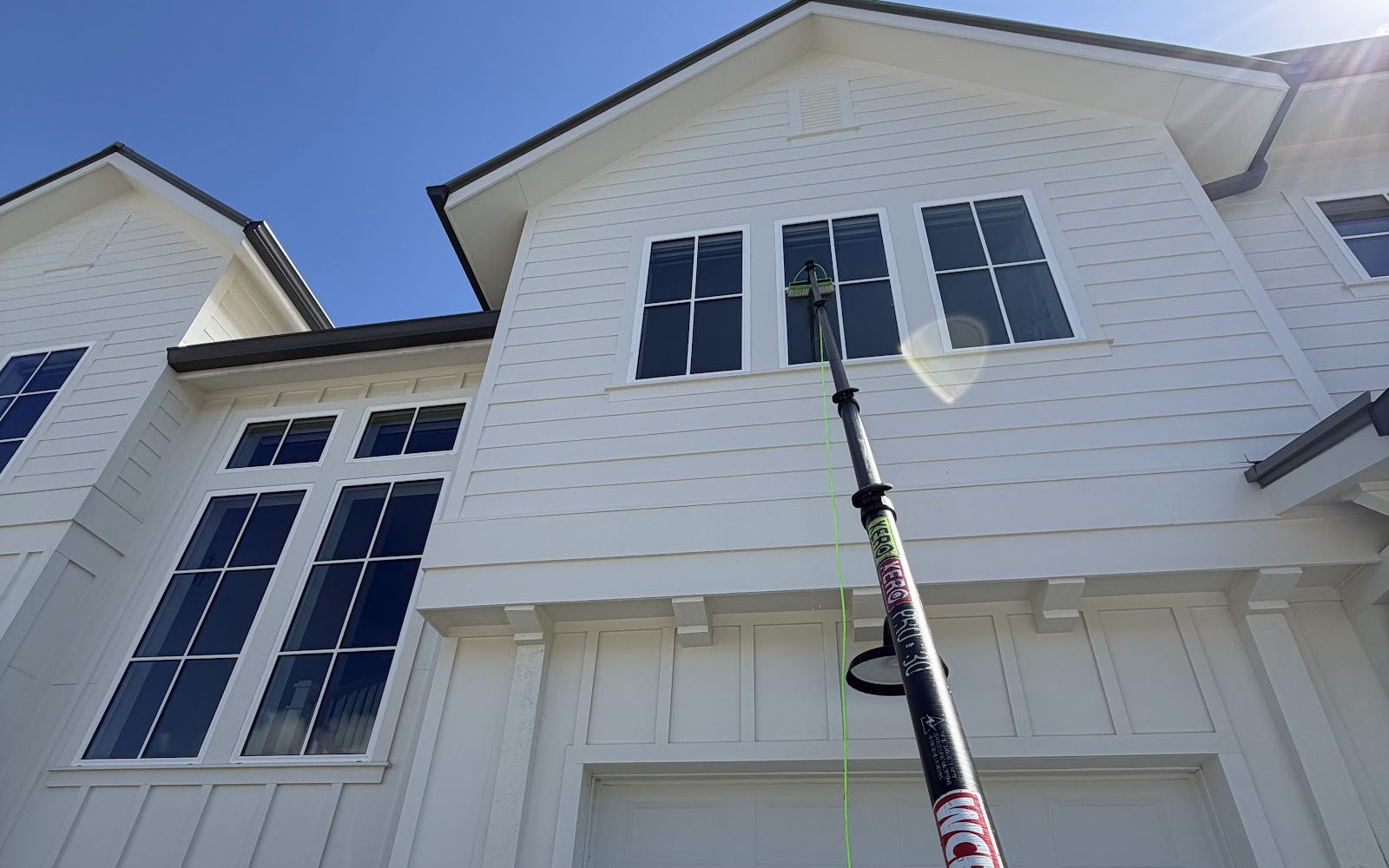
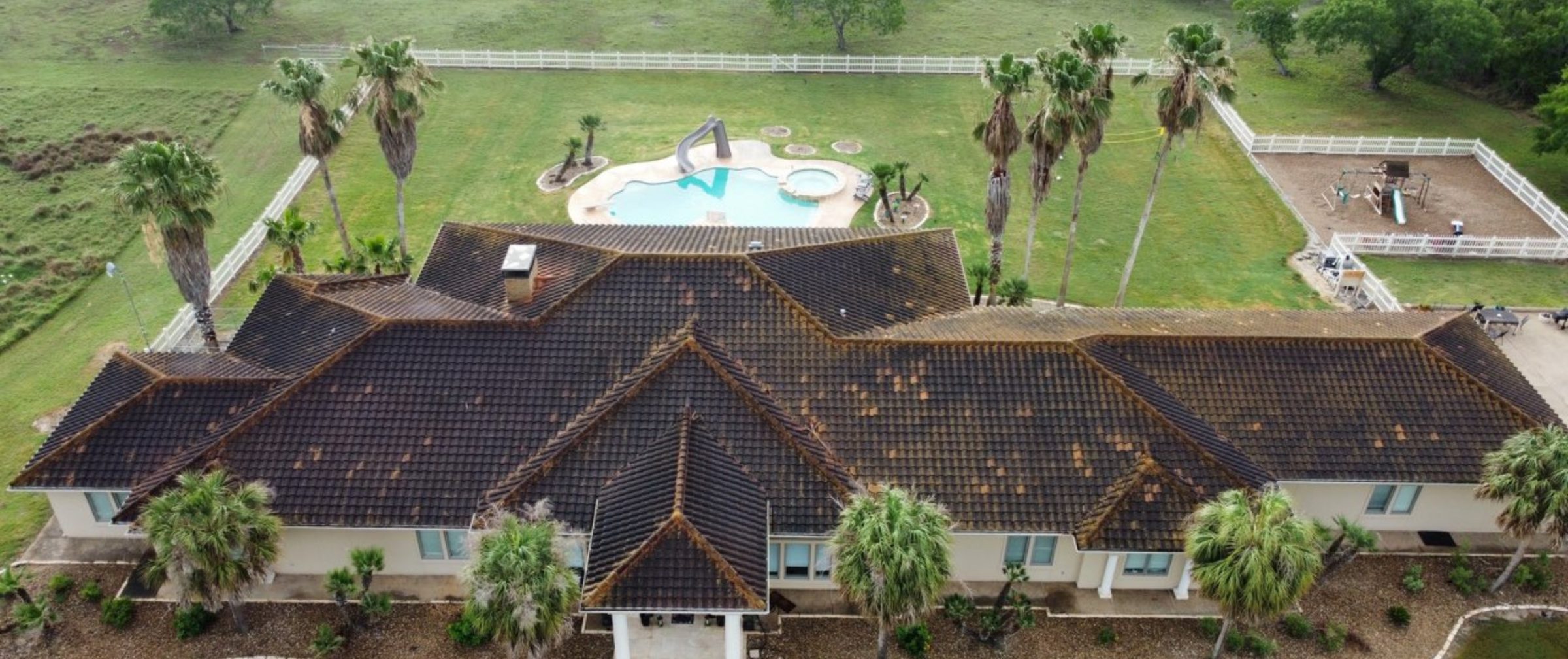
Take a photo from the ground and email it to fazpowerwashing@gmail.com, or call (361) 777-9140. Quotes are free, and Moises can quote it on site or over the phone. The photos on this page are Faz Power Washing jobs: a shingle roof with dark streaks along the ridges, and tile roofs that had gone dark.
Sources
- Algae Discoloration of RoofsAsphalt Roofing Manufacturers Association
- Algae & Moss Prevention and Cleaning for Asphalt Roofing SystemsAsphalt Roofing Manufacturers Association
Published November 23, 2026 by Faz Power Washing, Corpus Christi.